



In fast-growing companies, the biggest risk isn’t always the market.
It’s the moment you realize the floor never stops, while the systems behind it are suddenly carrying far more weight than they were designed for. Payroll grows. Benefits expand. Product development accelerates. One decision ripples faster than it used to.
That’s the difference between growth and scale.
And it’s why leadership in finance matters most before there’s a problem.
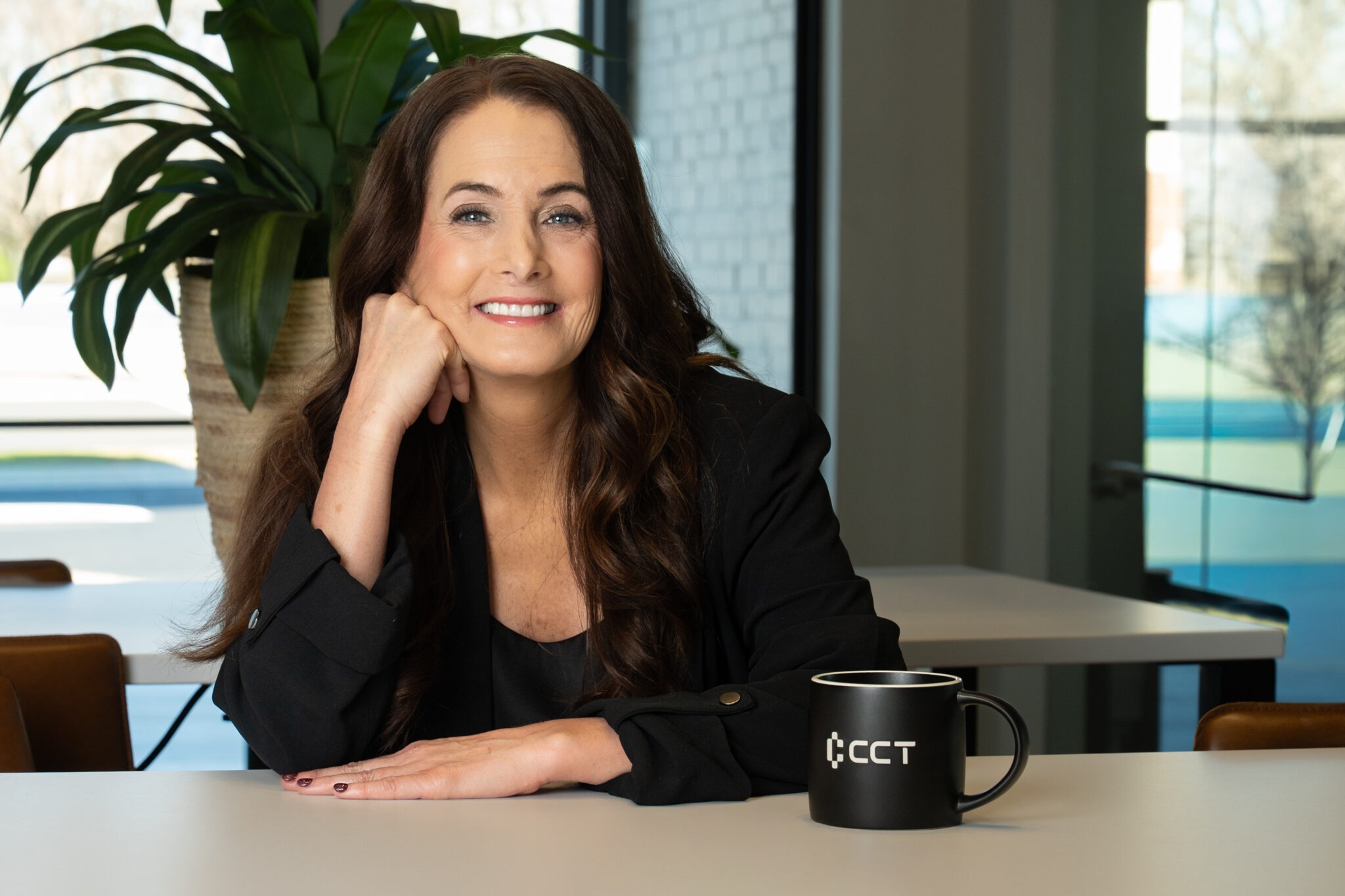
Sherry Stewart, CPA, knows that moment well. She joined CCT in October 2017 in what she expected to be a temporary role. She was asked to come in, hold space, and help the company navigate a transition.
At the time, CCT was still small enough that roles blurred. There was momentum, but structure was still taking shape.
What made the role work for Sherry wasn’t traditional accounting experience. She came from forensic accounting, a discipline that trains you to walk into stressed systems, trace what happened, and restore order—even when the information isn’t clean.
Over the last 8.5 years, Sherry became the person through whom nearly every critical financial signal passed, such as benefits, payroll, cash, accounting, taxes, and compliance. She describes it with a metaphor that’s both accurate and very Sherry: if she were a data warehouse, she has been the sole receiver of nearly all operational information that shaped CCT’s story.
“It would be remiss not to recognize that as my advantage,” she says. “Now I don’t have to go looking for information to turn it around. I already know it.”
She calls it her “secret sauce.” Then, with a laugh: “This is the original AI.”
This matters because enterprise clients don’t just buy software — they buy confidence. They buy reliability. They buy the belief that a system will hold under pressure: a 24/7 operation, constant movement, and a flow of money where the smallest errors can become expensive fast.
Sherry’s perspective is fundamentally built for that reality. She has spent years validating the integrity of data, the discipline that makes audits clean and decisions defensible. But now, as she steps into her new role as Vice President of Finance, her work shifts from confirming what happened to shaping what happens next: budgeting, forecasting, KPIs, and the mechanics of scale.
She’s the first to say this shift is real.
“My instinct has always been to make sure the numbers are right first,” she says. “That foundation doesn’t go away. This role just asks me to take that same discipline and use it to think further ahead, connecting what we know today with what we need to be ready for next.”
In Sherry, there’s clear-eyed awareness of the job, the gap, and the plan to close it.
But she also understands something many companies learn too late: growth can hide inefficiency until you introduce complexity. As the company grows, expectations naturally evolve. New product development introduces new cost patterns. Moving from on-premises to cloud changes everything. Suddenly, “one big bucket” no longer tells you what you need to know.
As Sherry puts it: if you don’t track costs and resources in the right places early, you can end up pricing products wrong, and then finding out a year later that what looked profitable wasn’t. You can correct, sure. But in a fast-moving business, preventing the “oops” is far cheaper than untangling it.
Her job, now, is to keep eyes on everything because she can see what most people can’t: the real costs, the real tradeoffs, and the real operational consequences of decisions that look simple on paper.
That same clarity shapes how she talks about CCT’s beginnings. It wasn’t an abstract idea so much as a practical frustration — watching spreadsheets struggle to support a 24/7 casino operation and realizing the system simply didn’t match the reality of the floor.
What followed was slow, deliberate work: early builds around kitchen tables, long drives across Oklahoma to sit with operators, and steady decisions about how the company would treat its people as it grew. From the beginning, that meant covering benefits, sharing profits, and reinvesting in the team with the same care given to the product.
For Sherry, what’s worth protecting as CCT grows isn’t nostalgia. It’s integrity.
“When you know the intent behind everything,” she says, “you can’t just say ‘we had such an amazing product, there was no way it was ever going to fail’. It definitely could have failed. But…Kurt and all of them? They kept going.”
Enterprise buyers pick up on that. The posture matters. It’s the difference between a vendor chasing logos and a partner building the future of operational trust.
And Sherry’s voice lands in the same place: practical, grounded, and ultimately human. She’s serious about confidentiality — “there are some things that don’t just leave my lips” — and equally serious about people. The kind of leader coworkers call when they’re at the dentist and can’t find their insurance ID. The kind of person employees bring their new dogs to, just to say hello.
When you’re building for enterprise, that combination is rare: rigor without ego, loyalty without performance, and leadership that knows the numbers and the people inside them.
As CCT enters its next chapter, with more products, more complexity, and greater enterprise demands, the finance function becomes a strategic advantage rather than a back-office necessity. Sherry stepping into Vice President of Finance signals to customers and partners that the company is scaling with intention, protecting what matters, and building the kind of operational trust that holds up when the work never stops.