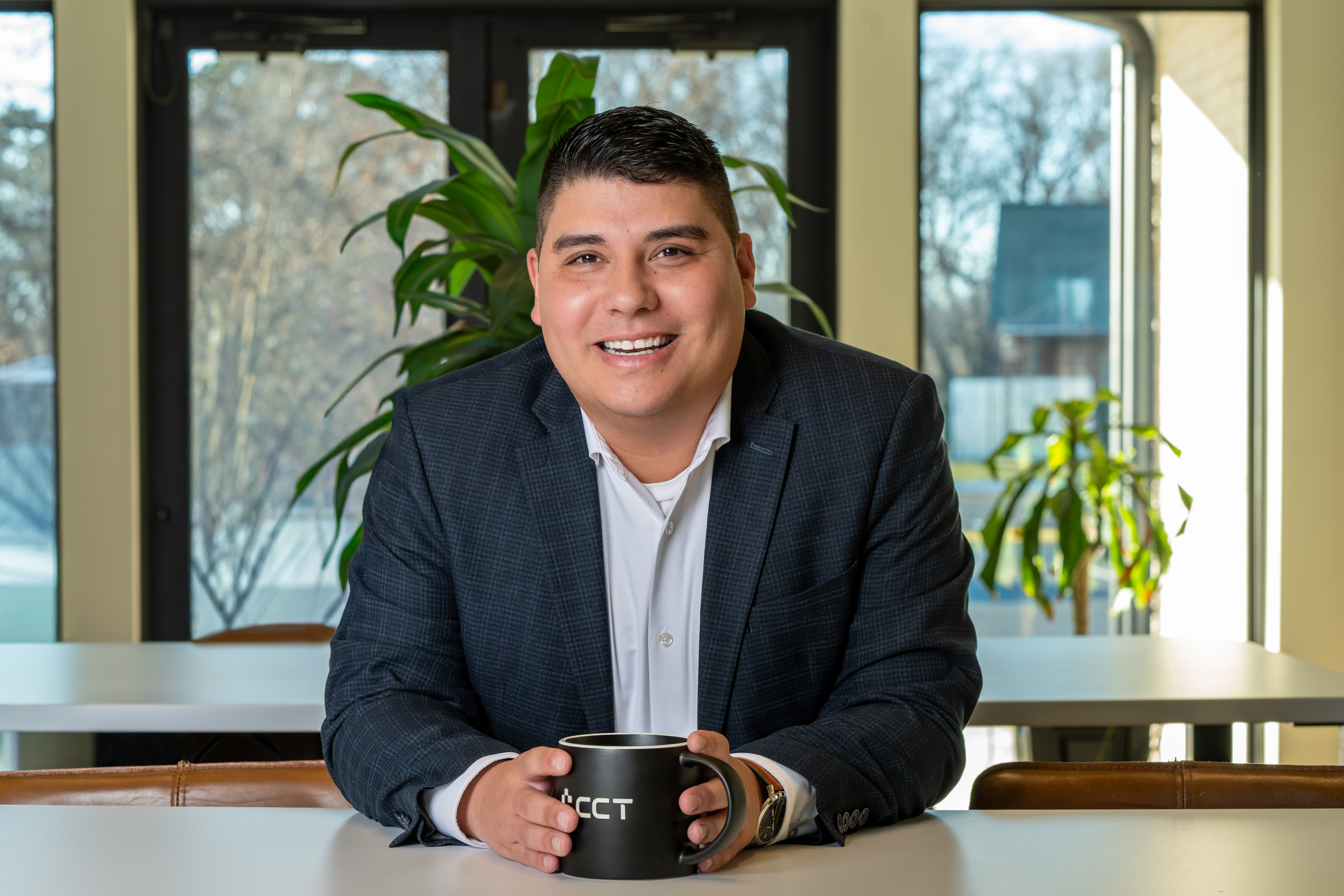




By Rustin Martin, Senior Accounting Consultant at CCT
When someone tells me they don’t trust the numbers, I don’t begin by trying to change their mind.
I ask them to show me why.
That was the situation when I began working with Derry Daubon at Seminole Casino Coconut Creek. The casino had an established process for auditing table games, and Derry understood every part of it. He knew where the information came from, how the team reconciled it and what casino leadership expected to see.
Then we arrived with a different way of doing it.
Before CCT, the team pulled information from its table-games system and combined it with vault activity in a manually maintained workbook. That workbook supported the reconciliation process and, ultimately, the journal entry.
It took time to assemble. Every number entered by hand also created another opportunity for human error. CCT could consolidate that information into one report, reducing the manual work required to prepare the audit. So while I understood the benefit, Derry still needed to see the proof.
Table games were especially important at Coconut Creek, and Derry was not going to change the process simply because a new system had become available. He questioned how we calculated table revenue, how we audited the activity and how the resulting entry would work for his team.
His position was straightforward: Until you can prove the numbers to me, I am not moving forward.
Honestly, I respected that.
Derry was responsible for numbers that other people relied on. He already had a process he could explain and defend. If we wanted him to use ours, we had to meet the same standard.
So instead of trying to settle everything at once, I began isolating his concerns.
If he told me something was not working, I would ask which part. Was it a particular calculation? A column in the report? The way an entry was grouped? Once we identified the exact point of disagreement, we could sit down together and follow the numbers all the way through.
Some of those conversations happened remotely. Others happened with us sitting together at the property. We reviewed how CCT produced the entry, where the underlying information came from and how the reporting could support the way Coconut Creek needed to review its table-games activity.
We also made adjustments. Derry wanted greater detail in the entry rather than seeing the activity only as an aggregated number. We configured the reporting to provide that detail and added a column his team needed for its review.
We worked from the controls Derry already trusted, then found ways for the software to support them with less manual effort.
There were challenging conversations along the way. We did not always agree immediately, and earning his confidence took longer than completing a training session or walking through a report once.
The turning point came gradually. Toward the end of an implementation, we typically return to the property to support the team through month-end. By the time I made that trip to Coconut Creek, Derry and I had spent a lot of time working through his questions. We understood how to talk to each other. He knew I would take his concerns seriously, and I knew those concerns would usually lead us to something worth examining.
By the end of the project, the casino had a more consolidated process with less manual data entry and fewer opportunities for transcription errors. Derry had a system he understood well enough to trust.
And me? I gained one of the closest client relationships of my career.
Derry and I still keep in touch. He texts me on holidays or reaches out simply because we have not spoken in a while. That friendship might seem surprising if you had heard some of our earliest conversations, but it makes sense to me.
We built it the same way we worked through the implementation: one honest question at a time.
To this day, that experience changed how I approach clients. When someone sees a process differently, that does not make their perspective wrong. Usually, there is a reason they are holding onto it. My job is to find that reason, simplify the issue until we are standing on common ground and build from there.
Sometimes the strongest client relationships begin with someone asking you to prove the numbers. The only way forward is to take the question seriously.